
“Safety > Price”
Most people assume that the plastics surrounding us are chosen because they are cheap. In reality, the dominant plastics of modern society are selected primarily because they are predictable—predictable in safety, performance, and long-term behavior when placed near humans, electricity, heat, and children.
When safety is used as the lens rather than cost or convenience, a clear hierarchy emerges. Across homes, schools, factories, and consumer electronics, five plastics dominate human environments: ABS, PP, PE, PS, and PC. Each exists not by accident, but because it satisfies a specific balance between mechanical stability, chemical safety, and regulatory acceptance. Understanding these materials helps explain why modern society looks and functions the way it does—and where its vulnerabilities still lie.
ABS (Acrylonitrile Butadiene Styrene)
Material Characteristics
ABS is arguably the most socially embedded plastic of the modern era. It is the reason consumer electronics feel solid rather than brittle, and why children’s toys survive years of abuse without splintering. ABS is a terpolymer, meaning it is composed of three different monomers, each contributing a specific function: acrylonitrile provides chemical resistance and rigidity, butadiene adds impact resistance, and styrene contributes surface smoothness and processability.
Applications
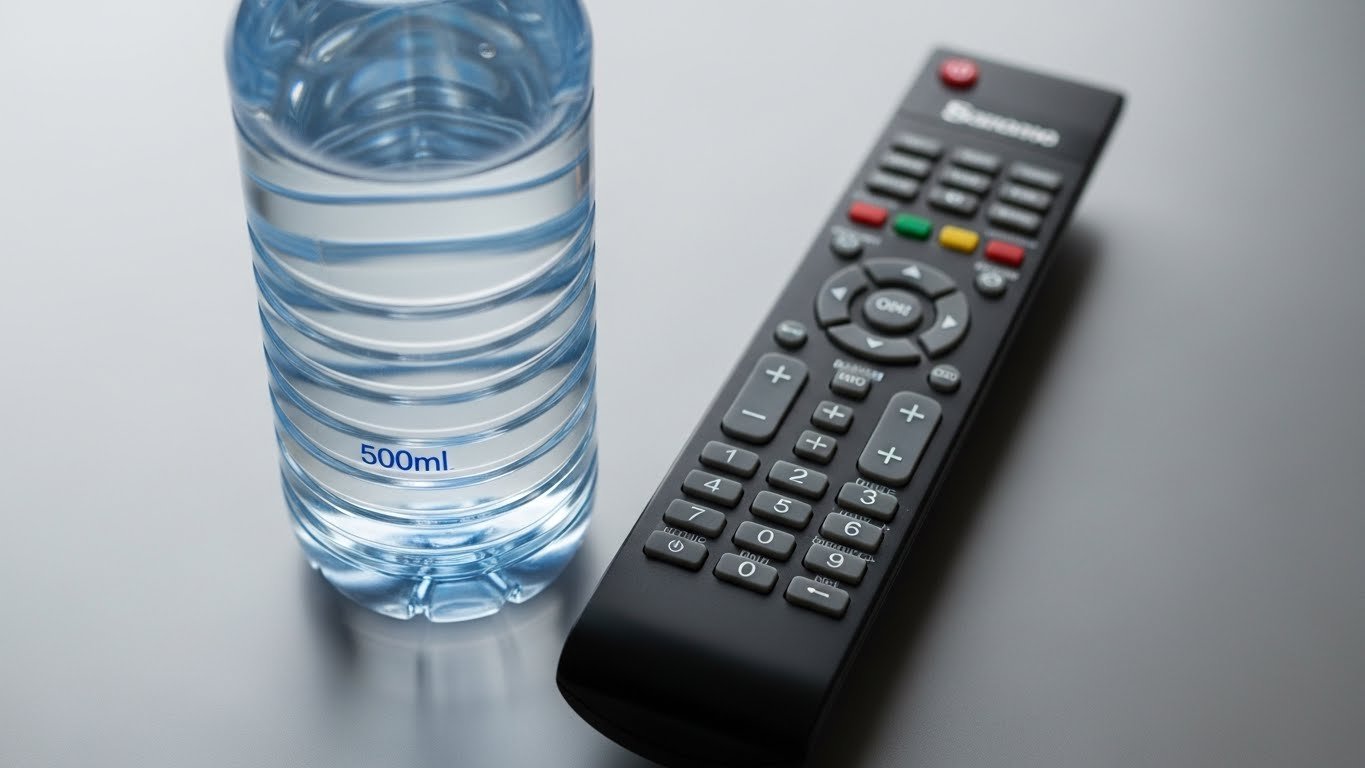
Application : TV and monitor housings, remote controls and game controllers, vacuum cleaner and small appliance exteriors, children’s construction toys (interlocking bricks), power tool casings
Safety Profile and Limitations
From a safety perspective, ABS performs well because it is structurally stable at normal indoor temperatures and does not easily deform or fracture into sharp edges. This makes it especially suitable for objects that are frequently handled, dropped, or pressed against the body. Regulatory agencies generally consider ABS safe for consumer use when properly manufactured, as it does not readily leach harmful substances under normal conditions.
However, ABS is not without limitations. It is not inherently UV-stable, meaning prolonged exposure to sunlight can cause surface degradation and discoloration. More importantly, ABS is not designed for food contact or high-heat environments. When overheated, it can release styrene-based compounds that are undesirable from a health standpoint. For this reason, ABS excels as a structural plastic in living spaces but should be avoided in applications involving food, boiling water, or sustained heat.
Polypropylene (PP)
Material Characteristics
Polypropylene is often described as the “quiet workhorse” of plastics. It lacks the visual appeal of ABS and the clarity of polycarbonate, yet it is one of the safest and most widely trusted plastics in direct human contact. Chemically, PP is a simple polyolefin, which contributes to its exceptional chemical inertness.
Applications
Application : food storage containers, microwave-safe kitchenware, medical syringes and specimen containers, appliance internal components, reusable baby bottles and caps
Safety Profile and Limitations
In safety terms, PP’s greatest strength is what it does not do. It does not easily react with acids or bases, it resists moisture absorption, and it remains stable across a broad temperature range. It also has a relatively high melting point compared to many commodity plastics, reducing the risk of deformation or chemical migration under warm conditions. These characteristics have made PP one of the most heavily approved plastics across global health and food safety standards.
That said, PP has mechanical trade-offs. It is less rigid than ABS and can become brittle in extremely cold environments. Designers compensate for this by increasing wall thickness or blending PP with modifiers. From a consumer safety standpoint, PP is among the lowest-risk plastics available, but users should still avoid repeated high-temperature exposure in non-certified products.
Polyethylene (PE)
Material Characteristics
Polyethylene is the most produced plastic in human history, and its prevalence is directly linked to its biological compatibility. Available primarily as HDPE (high-density polyethylene) and LDPE (low-density polyethylene), PE is chemically simple and remarkably stable. Its molecular structure lacks aromatic rings or reactive functional groups, which significantly reduces the likelihood of toxic byproducts.
Applications
Application : milk and detergent bottles (HDPE), plastic bags and films (LDPE), toy parts and squeeze toys, wire and cable insulation, household containers and lids
Safety Profile and Limitations
PE’s softness and flexibility make it ideal for applications where human skin contact is constant. From a safety perspective, PE ranks among the least concerning plastics currently in use. It does not require plasticizers like phthalates to remain flexible, and it has a long history of regulatory approval for food and medical applications.
The primary concern with PE is not toxicity, but environmental persistence. While it is chemically safe for humans, it degrades extremely slowly in natural environments, contributing significantly to long-term plastic pollution.
Polystyrene (PS)
Material Characteristics
Polystyrene occupies a more controversial position. Structurally, PS is rigid and lightweight, which makes it attractive for packaging, disposable products, and internal components of appliances. However, its safety profile is more conditional than the plastics discussed so far.
Applications
Application : disposable cutlery and packaging, appliance internal structural parts, rigid toy components, CD and DVD cases, laboratory petri dishes
Safety Profile and Limitations
In solid, rigid form, PS is generally considered safe. Problems arise primarily with thin, disposable forms such as foam cups or food containers, where heat or acidic contents can accelerate styrene migration. This is why many countries have restricted or discouraged expanded polystyrene in food-related applications.
From a human-society perspective, PS is widely used not because it is ideal, but because it is inexpensive and easy to mold. Consumers should be especially cautious with PS products exposed to heat, oils, or repeated use.
Polycarbonate (PC)
Material Characteristics
Polycarbonate represents the high-performance end of consumer plastics. Known for its transparency and impact resistance, PC is used in safety goggles, medical devices, electronic screens, and durable toys. Mechanically, it is one of the toughest plastics available.
Applications
Application : safety goggles and face shields, electronic device screens and covers, reusable water bottles (BPA-free), medical device housings, impact-resistant toys
Safety Profile and Limitations
The safety discussion around PC is inseparable from bisphenol A (BPA). While modern manufacturing increasingly produces BPA-free polycarbonate or alternative formulations, legacy products and low-quality items may still pose risks.
Despite these concerns, PC remains widely used because its mechanical advantages are difficult to replicate. The key safety principle with PC is context: it is highly suitable for impact-resistant, non-food applications, but users should avoid heating, scratching, or aging PC products intended for food or drink unless they are clearly certified as BPA-free.
Conclusion
Taken together, these five plastics illustrate how human society prioritizes safety through predictability rather than perfection. ABS provides structural reliability, PP and PE offer chemical neutrality, PS fills low-cost gaps with caveats, and PC delivers unmatched strength at a chemical trade-off.
For consumers and product designers alike, the most important safety principle is not to treat plastic as a single category. Safety depends on polymer type, manufacturing quality, intended use, and environmental conditions. Heat, UV exposure, repeated stress, and misuse can transform a safe material into a problematic one.
Understanding these distinctions allows for better choices—not just as buyers, but as participants in a society built quite literally on polymers.